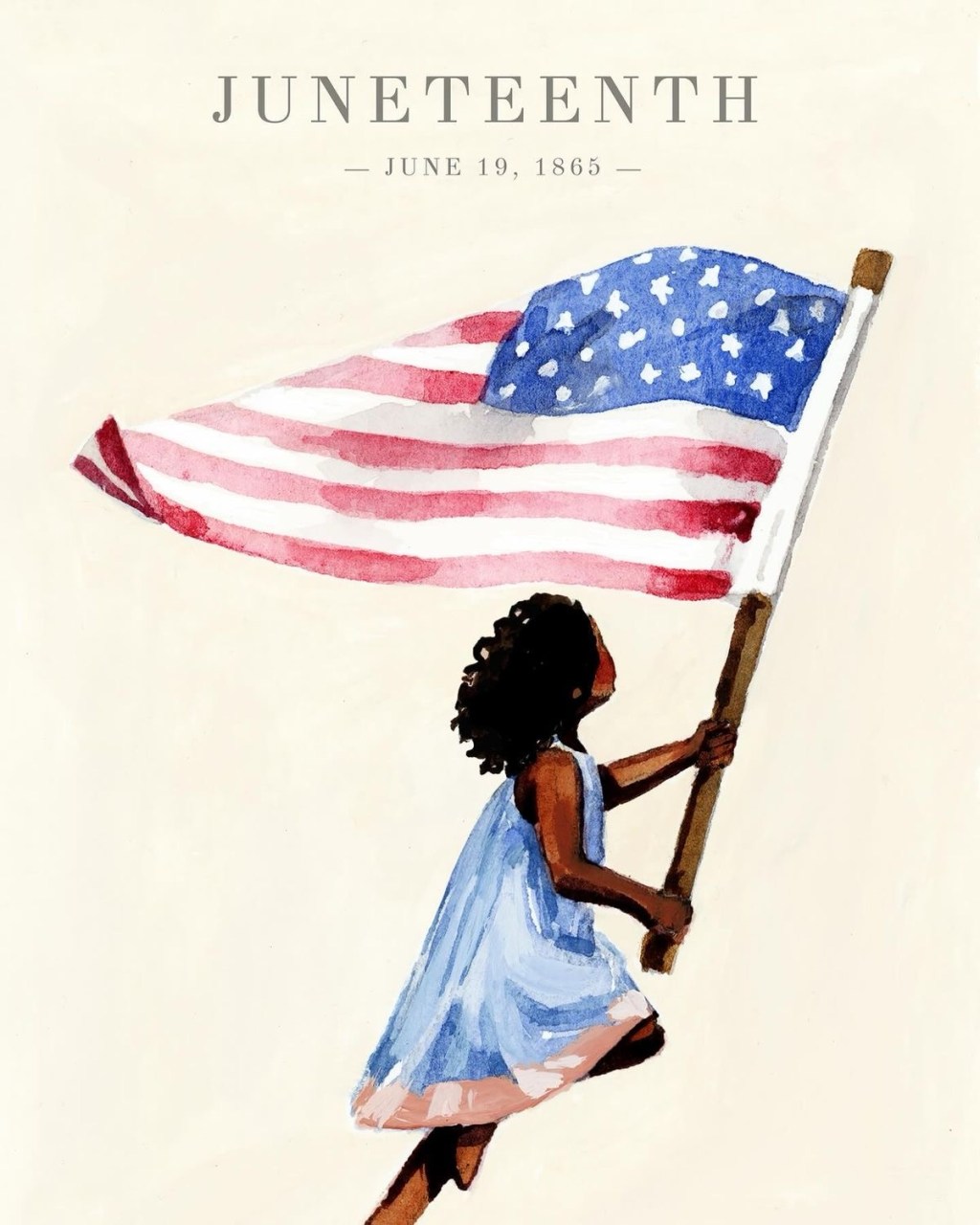
June 2026
This month’s article was originally going to be yet another deep analysis on how racism in America continues to shape justice, education, history, and community but that story has been written and told many times over.
However, I’ve found myself thinking about something else. How most of us spend our days staring into a 6.1-inch rectangular Retina screen, endlessly consuming a stream of media and narratives. We watch headlines, debates, scandals, and distractions unfold in real time all the time. While we live in a world where “trillionaires” can walk among the very same people who struggle to afford food, housing, and basic necessities.
The contrast is impossible to ignore. While we’re busy scrolling, arguing, reacting, and choosing sides, the deeper systems shaping our lives often go unquestioned.
In the midst of yet another “race war,” I’ve found myself wondering whether race is the root issue or is it simply the most visible expression of something deeper.
What if race, religion, class, and gender are not the foundation, but the forms through which a larger force operates?
Why do the same conflicts keep resurfacing generation after generation? Why do we remain trapped in familiar cycles of division, hierarchy, and struggle?
Today, we’ll explore a provocative question: What if the underlying force isn’t race, religion, class, or gender alone but the enduring logic of dominance and supremacy itself?
In this article, we will honor Juneteenth, the very celebration that challenged my perspective and inspired me to focus on love, unity, and our shared humanity.
We’ll also explore what it means to stay committed to that mission while tuning out the voices that actively work against it, especially from people and places where support would seem most likely. Most importantly, we’ll examine how systems of dominance and supremacy continue to shape our world today, influencing the way we think, interact, and understand one another.
Juneteenth| More Than Just A Date
Juneteenth commemorates June 19, 1865, the day Union troops arrived in Galveston, Texas, and announced that enslaved people were free, more than two years after the signing of the Emancipation Proclamation. While freedom had already been declared, many enslaved people remained unaware of it or were deliberately prevented from receiving the news. Juneteenth stands as a reminder that freedom delayed is freedom denied, and that justice loses meaning when access to it is withheld.
The holiday is not simply about Texas. It represents a larger truth about America: freedom has often arrived unevenly, and the struggle to secure it has required persistence, courage, and remembrance. By honoring Juneteenth, we acknowledge both the resilience of those who endured slavery and the responsibility of future generations to learn from the past rather than erase it.
My Personal Reflection
This year, as Juneteenth approached, I noticed many Soulanni’s sharing traditions, stories, and cultural practices connected to Black American heritage. One tradition that particularly caught my attention was Elukami, also known as “Indigo Fingers.” Rooted in the experiences of enslaved ancestors within Gullah Geechee and Hoodoo communities, the practice honors those who harvested and processed indigo plants, a labor that often stained their fingers and hands a deep blue-black. What was once evidence of forced labor has been transformed into a symbol of remembrance, resilience, and cultural pride.
Yet as I watched these conversations unfold, I also saw debates emerge. Some questioned the relevance of certain traditions, arguing that Juneteenth is specifically about the emancipation of enslaved people in Texas and should not be connected to broader Black American experiences. The discussions quickly became less about honoring history and more about deciding who belonged in the story.
For me, that felt like another setback, not only in terms of education, but in our collective ability to understand one another. Too often, we become trapped in arguing over categories, regions, identities, and differences, while missing the larger lesson history is trying to teach us.
Rather than leaving me angry, these conversations challenged me to think differently. They pushed me away from division and toward understanding. I began to realize that honoring the suffering and triumphs of our ancestors does not require hatred toward anyone else. Remembering history does not require creating new enemies. It requires honesty, empathy, and a willingness to learn from one another.
Why Juneteenth Still Matters
Juneteenth remains relevant because the questions it raises are still with us today. Conversations about equality, opportunity, justice, and belonging continue to shape our communities and institutions. While the forms may change, the pursuit of human dignity remains ongoing.
At the same time, there is an important distinction between remembering history and becoming trapped by it. Remembering history allows us to honor those who came before us, recognize past injustices, and understand how they continue to influence the present. Becoming trapped by history, however, can keep us locked in cycles of resentment, blame, and division.
The goal of remembrance is not to relive the past endlessly. The goal is to learn from it. Juneteenth invites us to do both: to tell the truth about where we have been and to work together toward where we hope to go.
Section II: Life Through a Screen
Most of the world experience current events especially black Americas through a phone screen. For many Black Americans, social issues, cultural conversations, and breaking news arrive not through firsthand experience, but through a carefully crafted feed that wasn’t curated by us. Every swipe, share, comment, and reaction shapes what we see next.
The challenge is that social media platforms are not necessarily designed to promote understanding but are designed to maximize engagement. Algorithms often reward content that generates strong emotional responses, whether that emotion is anger, fear, outrage, or conflict. Controversy drives clicks. Division drives discussion. The more emotionally charged a topic becomes, the more likely it is to be amplified and placed in front of larger audiences.
As a result, the loudest voices often receive the most attention, while thoughtful, balanced, and nuanced perspectives struggle to compete. Complex issues become reduced to viral clips, headlines, and talking points. While people are encouraged to pick a side before they have fully understood the true issue itself.
The emotional cost of this environment is significant. Constant exposure to outrage can leave people feeling exhausted, cynical, anxious, and disconnected. Over time, it becomes easy to view every disagreement as a battle and every conversation as a conflict that must be won rather than understood.
What We Miss
Lost beneath the noise are the real people behind the headlines.
Every viral story involves human beings with experiences, fears, hopes, and histories that cannot be captured in a fifteen-second clip or a trending hashtag. Yet social media often encourages us to respond to symbols and stereotypes rather than people.
Nuance is another casualty. Most issues are rarely as simple as they appear online. Reality often exists in the gray areas, where multiple truths can coexist and where understanding requires patience rather than instant judgment. However, nuance does not spread as quickly as outrage, making it one of the first things sacrificed in public discourse. Perhaps most concerning is how entire communities become caricatures of one another. People begin to view groups through the lens of their most extreme representatives rather than their everyday realities. Neighbors become labels. Individuals become statistics. Communities become stereotypes.
When this happens, meaningful dialogue becomes nearly impossible. We stop listening to understand and start listening to defend our position. The result is a society that becomes increasingly connected through technology while growing further apart in understanding.
The irony is that the more information we have access to, the easier it can become to lose sight of the humanity standing behind it.
Section III: The Root Beneath the Surface
Race. Religion. Gender. Politics. Economic class.
These are some of the categories through which human beings organize themselves and make sense of the world. They shape identities, communities, opportunities, and experiences. They carry real consequences and cannot simply be dismissed.
Yet when public conversations become heated, we often find ourselves trapped arguing over the container rather than examining what may be operating within it.
We debate race. We debate gender. We debate political parties, religious beliefs, and economic status. While these discussions matter, they can sometimes obscure a deeper question:
What drives people to seek power over others in the first place?
The Organizing Logic
Throughout history, societies have taken many forms, but one pattern appears repeatedly: the pursuit of dominance and supremacy.
By dominance, I mean the desire to control, rank, or exert power over others. By supremacy, I mean the belief that one group, identity, ideology, or class is inherently more deserving of status, authority, or value than another.
The labels change. The structure often remains.
History offers countless examples. Empires conquered neighboring peoples. Monarchies claimed divine authority over entire populations. Caste systems ranked human beings by birth. Colonial powers justified expansion through claims of superiority. Even modern institutions can struggle with questions of power, privilege, and exclusion.
These systems have existed across races, cultures, religions, and nations. They have appeared in every corner of the world and under many different banners. The justification changes. The desire for control often remains the same.
This does not mean race, religion, gender, or class are unimportant. Rather, it suggests they may sometimes function as vehicles through which deeper struggles over power and status are expressed.
Beyond Black and White
When we think about dominance, it is tempting to picture only large historical systems or political movements. But the same impulses can emerge in everyday life.
They can appear in workplaces where titles become more important than people.
They can appear in schools where social status determines who is valued and who is ignored.
They can appear in families where authority becomes control rather than guidance.
They can appear in politics where winning becomes more important than serving.
They can appear online where likes, followers, and influence become measures of human worth.
No group is completely immune to the temptation of superiority. No ideology is automatically protected from hypocrisy. No community is incapable of creating its own hierarchies.
That realization can be uncomfortable because it shifts the conversation away from identifying villains and toward examining patterns. It asks not only what systems we oppose, but what habits we may unknowingly reproduce ourselves.
Section IV: When the Call Comes From Inside the House
Unexpected Opposition
One of the most difficult lessons I’ve learned is that criticism does not always come from people who disagree with you.
Sometimes it comes from people who appear to share your values, your goals, or even your lived experiences.
In an age of online tribes and ideological camps, there is often pressure to think, speak, and respond in approved ways. Nuance can be mistaken for betrayal. Questions can be mistaken for disloyalty. Complexity can be mistaken for weakness.
As a result, many people find themselves navigating unofficial purity tests where belonging becomes conditional upon agreement.
The challenge is learning how to remain honest without becoming hostile.
Staying Focused
It is easy to condemn domination when it comes from an opponent.
It is much harder to recognize it when it appears among people we consider allies.
That is why integrity matters.
If we oppose exclusion, we cannot justify excluding others whenever it benefits our side.
If we oppose dehumanization, we cannot dehumanize those with whom we disagree.
If we oppose supremacy, we cannot replace one hierarchy with another.
Choosing principles over popularity requires courage because it often means disappointing people on multiple sides of an issue. Yet lasting change has rarely been built on applause. It has been built by people willing to remain grounded in their values even when doing so is uncomfortable.
Section V: Choosing a Different Path
Love as Resistance
Love is often misunderstood as passive or weak.
In reality, love may be one of the most demanding choices a person can make.
It is easier to hate than to understand. Easier to stereotype than to listen. Easier to dismiss than to engage.
Love does not require agreement. It does not require abandoning accountability or pretending injustice does not exist.
What it requires is recognizing the humanity of others even when conflict exists.
That takes strength.
Community Over Dominance
If dominance asks, “How do I gain power over others?” community asks, “How do we flourish together?”
It begins with listening instead of labeling.
Understanding instead of assuming.
Building instead of destroying.
Cooperation instead of supremacy.
The strongest communities are not those where everyone is identical. They are those where people learn how to work through differences while preserving one another’s dignity.
The Future We Can Create
Imagine a society where human worth is not determined by race, class, gender, political affiliation, income, education, or social status.
Imagine communities where disagreement is not treated as a threat, but as an opportunity to learn.
Imagine schools that teach critical thinking alongside empathy.
Imagine workplaces that value people as much as productivity.
Imagine neighborhoods where differences become sources of strength rather than division.
The future we create will not be determined solely by politicians, institutions, or social movements. It will also be shaped by ordinary people making daily choices in their homes, schools, workplaces, and communities.
Every conversation matters.
Every act of dignity matters.
Every choice to resist domination and choose understanding matters.
Closing Reflection
What would change if we stopped asking who should be above whom and started asking how we can rise together?
Juneteenth stands as a powerful reminder that freedom is more than emancipation but the full recognition and honoring of human dignity.
The challenge before us is not only to remember the past, but to decide what kind of future we want to build. Will we continue repeating cycles of division, hierarchy, and domination, or will we choose a path rooted in understanding, responsibility, and our shared humanity?
The answer may begin with each of us.


Leave a Reply