Between The Headlines| Special Edition
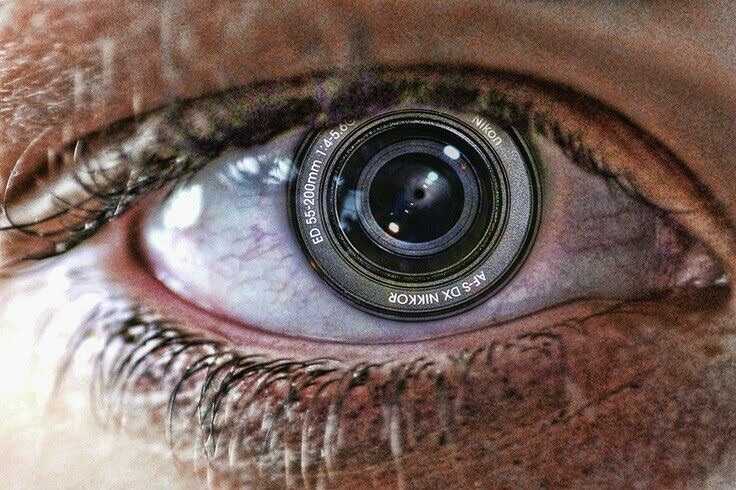
What if the world of Black Mirror isn’t as fictional as we once believed? Today, cameras follow us into places we shop, drive, work, and socialize. From Flock Safety cameras capturing vehicles in public spaces to Walmart’s increasingly visible privacy notices and in-store surveillance, technology has made recording and tracking an ordinary part of everyday life. At the same time, we willingly participate by constantly filming ourselves, sharing our locations, and documenting our lives through our phones. The question is no longer whether surveillance exists, it’s how much of our lives are being recorded, who has access to that information, and whether we truly understand what we have agreed to.
Flock Safety has been heavily in the news as of late. 
“Better tools for safer communities”
Have you heard of them?
Flock develops technology that empowers communities to effectively deter crime, respond swiftly to emergencies, and investigate safety incidents. “We firmly believe that communities should not be forced to make a choice between public safety and privacy.”
If not, they have been in the news lately for one of their creations, the flock camera. However, “Flock Safety offers more than just cameras. They provide a comprehensive public safety platform that includes license plate recognition cameras, video and audio detection systems, drones, and mobile security trailers. Their solutions are designed to help communities and law enforcement prevent and solve crime effectively.”
Sounds all good right?! Security cameras have been a thing for decades!
Wrong!
An Anonymous American States
“Flock cameras aren’t just license plate readers that automatic logs on every car that passes them – make, model, color, plate number, time, direction.
They’re not just recording footage you’d have to manually review like a normal security camera.
They’re building a searchable database of every vehicle’s movements across a city.”
People are upset because it’s passive mass surveillance for everyone, not just criminals.
“Police can retroactively track where you’ve been, when, and how often, without a warrant. HOAs and private neighborhoods are also installing them, meaning private companies are collecting your movement/data too. It’s the difference between a security guard seeing you walk by and someone logging every trip you take forever”
How They Work
- Capture details: They take still photos of passing cars. They record the license plate, make, model, color, and unique features like bumper stickers or scratches.
- Build a database: The data goes into a searchable cloud network used by police departments, private businesses, and HOAs.
- Send alerts: If a scanned plate matches a hotlist (like a stolen vehicle or a missing person), police get a notification
People are concerned about mass surveillance because it tracks the movements of everyday drivers, not just criminal suspects. Furthermore, law enforcement can share data across cities and states without a warrant, raising privacy risks.
This month, Flock Safety automated license plate reader (ALPR) cameras faced nationwide backlash over mass surveillance, privacy violations, and documented cases of law enforcement misuse.
The Core Controversies & Concerns were Law Enforcement Misuse
Officers have been caught using the private database to stalk, track ex-partners, or improperly share sensitive location data. One notable case: a San Jose officer was fired for misusing the Flock camera database in a domestic dispute. Civil liberties groups, including the ACLU, contend that the involuntary logging of every passing driver constitutes mass surveillance. Critics further highlight instances where data collected for one purpose, such as immigration enforcement, has been accessed for unrelated reasons. Lastly, false positives have resulted in innocent motorists being pulled over at gunpoint due to erroneous stolen-vehicle alerts, leading to high error rates.
In a world where I feel compelled to warn everyone I know to be cautious, because 9 times out of 10, You Are Being Watched!!!
Beyond the Checkout: How Walmart Watches!
Walmart’s has added Customer Privacy Notices, updated August 20, 2026, and it specifically applies to Walmart’s physical U.S. stores as well as its websites and apps!
Walmart says it may collect information while you are physically in its stores, including:
- Camera/automated technology: Walmart says cameras and automated technologies can capture images of customers in stores and on Walmart property for security, theft prevention, and operational purposes.
- Device identifiers: Depending on how you interact with Walmart technology, (wifi) information such as device identifiers and network activity may be collected.
- Location information: Walmart says it may recognize a mobile device in stores through Wi-Fi or Bluetooth, and—depending on your device settings and consent—may collect precise location information.
- License-plate readers: Walmart says automated license plate readers (ALPRs) may be used on its properties where permitted by law.
- Account/purchase information: If you use Walmart Pay, Walmart+, Scan & Go, provide your phone number, etc., that information can be associated with your Walmart account and transactions.
The overarching reality is that we are constantly being filmed, whether it’s ourselves, each other, or by these large corporations. Cameras have become an integral part of our daily lives. We record ourselves, others record us, businesses employ surveillance systems, phones collect sensor and location data, and online platforms gather behavioral data.The crucial part lies in who controls the recording, the data collected, its retention period, and its intended use. Being surrounded by cameras doesn’t necessarily mean constant real-time monitoring of everyone. Now I can’t say for a fact that everyone is being watched but now in every moment you can be sure that evidence of your existence is being left behind significantly more digitally and visually like never before
Welcome To Black Mirror| Real Life Edition
Black Mirror captures this idea especially well in “The Entire History of You” (Season 1, Episode 3). In the episode, people have a technology called a “grain” implanted that records everything they see and hear, allowing them to replay any moment of their lives. What begins as a tool for convenience and memory gradually becomes a source of obsession, surveillance, and distrust.
Ultimately, the world we are living in increasingly resembles the warnings portrayed in Black Mirror. We have entered an era where being recorded, tracked, and documented has become a normal part of everyday life. Sometimes this is done by ourselves, sometimes by the people around us, and sometimes by corporations and technologies operating quietly in the background. The issue is not simply that cameras exist; it is that technology is becoming deeply intertwined with how we move through, experience, and remember our lives. Black Mirror challenges us to consider what happens when convenience, security, and connectivity gradually come at the cost of privacy. As technology continues to advance, the most important question may no longer be whether we are being watched, but whether we remain conscious of what is being collected, who has access to it, and how much control we still have over our own digital lives.


Leave a comment