Between The Headlines | October 2026
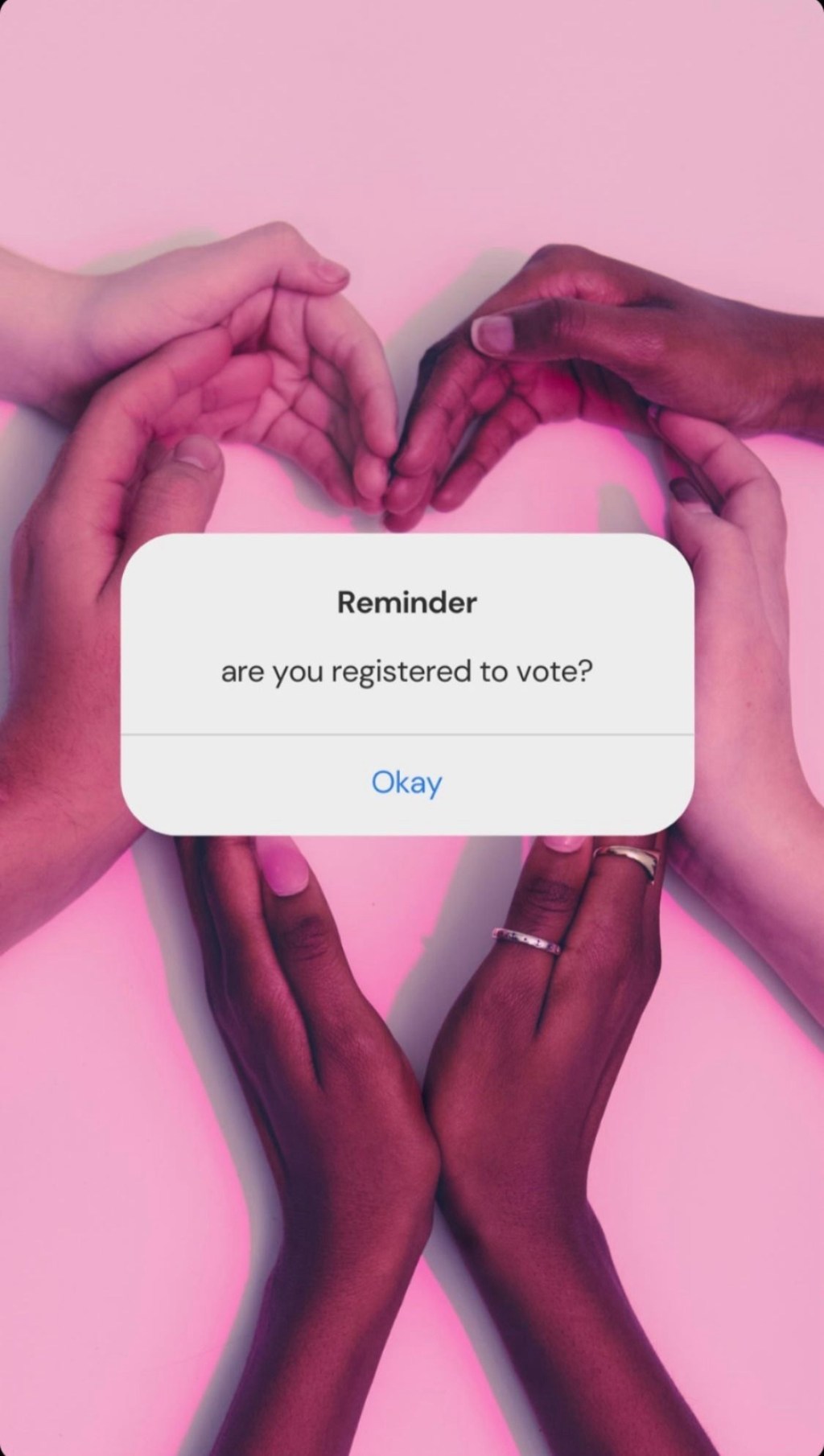
There is a question I think more people should be comfortable asking: What does my vote actually mean?
Not what we have been taught it does. Not what campaign advertisements tell us it does. Not what politicians remind us it does every four years when they suddenly need our participation.
What does it actually change?
I’ve never voted.
Growing up in the 1990s and 2000s, constantly having Jim Crow, slavery, and even the Holocaust shoved down my throat, it was easy to develop a complicated relationship with American history and the institutions responsible for shaping the country we live in today.
I understand the history. I know my ancestors fought, marched, protested, organized, and sacrificed for the right to vote. I know that right was not freely handed to them. I also understand the significance of the Civil Rights Movement and the people who walked alongside Dr. Martin Luther King Jr., demanding access to institutions that had spent generations excluding them.
But understanding the sacrifices that made a right possible does not mean I have to stop questioning what that right accomplishes today.
Sometimes I wonder whether we have become so focused on celebrating the opportunity to participate that we have stopped asking whether our participation is producing the changes we were promised.
The government has never made me feel as though the people are its first priority. Our needs do not consistently come first. And regardless of which political party is in office, there are certain problems that seem to survive every administration.
Even in our conspiracy bag, there are conversations worth having about the systems we live under.
Children are not adequately protected. Healthcare remains financially inaccessible for many families. The food supply raises legitimate questions about nutrition, processing, and transparency. Housing is increasingly difficult to afford. Meanwhile, Americans continue to debate how their tax dollars are allocated, including the billions directed toward foreign governments and international conflicts.
These are not small concerns. These are everyday concerns that affect whether people can afford to live, raise children, stay healthy, and feel secure in their own communities.
So tell me, how does my vote matter?
Tell me what significant changes our votes will make.
We hear right wing and left wing, Republican and Democrat, conservative and liberal. But sometimes I look at the political landscape and see two wings attached to the same bird. Different messaging, different campaign promises, different approaches to governing, but a political system that still seems remarkably comfortable operating without the average person’s needs at the center.
And that is where my skepticism begins.
I am not suggesting that every candidate is the same or that every policy produces the same outcome. That would be intellectually dishonest. But I am questioning why so many of the issues affecting ordinary people remain unresolved while political conversations repeatedly turn into arguments about which side deserves our loyalty.
Perhaps the better question is not whether voting matters in theory.
Perhaps it is whether we understand what we are voting for.
Understanding the Ballot and Voter Registration
Arizona’s General Election is scheduled for Tuesday, November 3, 2026.
For someone who has never participated in an election, navigating the process can feel like entering a conversation everyone else already knows how to have. There are candidates, propositions, judges, legislative districts, congressional races, and local offices. And somewhere in the middle of all of that, voters are expected to make informed decisions.
But what exactly are we being asked to decide?
A ballot is more than a list of presidential or gubernatorial candidates. Depending on where you live, it can include:
- Federal offices: U.S. Senate and House of Representatives.
- State offices: Governor, secretary of state, attorney general, treasurer, and other statewide positions when scheduled.
- State Legislature: Representatives and senators responsible for creating state laws and approving the state budget.
- County and local offices: Positions that influence local services, public safety, elections, and community resources.
- Ballot propositions: Questions asking voters to approve or reject proposed laws or constitutional changes.
- Judicial retention: In certain elections, voters decide whether particular judges should remain in office.
Your ballot is determined by your residential address and voting district. Two Arizona residents can receive different ballots even though they are participating in the same general election.
This is why I think it is important to look beyond the names we recognize and understand what each position actually controls.
A candidate running for governor does not have the same responsibilities as a state legislator. A county official does not have the same authority as a member of Congress. And voting on a proposition is not the same thing as voting for a person.
If we are going to participate, we should at least understand the decisions being placed in front of us.
For this election, the Arizona Secretary of State identifies November 3 as Election Day. Early voting began October 7. The voter registration deadline was October 5, meaning anyone who missed that deadline cannot newly register for this particular election. Existing registered voters should still verify their registration and ballot information.
One distinction worth making: being registered and being politically affiliated are two different things. Arizona voters who register without choosing a political party can still vote in the general election. You do not have to identify as a Republican or Democrat to participate in November’s election.
For Maricopa County voters, the important practical details are:
- Election Day voting is available November 3.
- Vote centers are open from 6 a.m. to 7 p.m.
- If returning an early ballot, it must be received by 7 p.m. on Election Day. A postmark is not enough.
- The deadline to request a mail ballot has passed, but voters can still use an authorized voting center to cast their ballot in person.
Official resources:
- Arizona Secretary of State – 2026 Election Information
- Maricopa County Elections Calendar
- Arizona Voter Education Guide
- Arizona General Election – County Information
The Candidates and What They Stand For
This is where I think voters need to slow down.
A familiar name, a party affiliation, or a well-produced campaign advertisement should not be enough to earn someone’s vote. We should be looking at the candidate’s record, their policy positions, their financial interests, their public statements, and whether their proposals are realistic.
For Arizona’s 2026 General Election, one of the biggest races is the governor’s race. But there are several other statewide positions that deserve attention.
Governor
The governor has considerable influence over the direction of Arizona. Responsibilities include signing or vetoing legislation, proposing a state budget, appointing officials to certain positions, and overseeing the executive branch.
The candidates on the November ballot:
- Andy Biggs / Sine Kerr – Republican
- Katie Hobbs / John Giles – Democratic
- Teri Ann Hourihan / Angela Harrolle Mohan – No Labels
- Risa Lombardo / Lisa Castillo – Green Party
What should we be asking?
- What are their plans for affordable housing?
- What will they do about the cost of living?
- What are their positions on public education?
- How do they plan to address Arizona’s water supply?
- What are their plans for healthcare access?
- How do they approach immigration and border policy?
- What is their record on protecting individual rights?
These questions matter regardless of political affiliation. I am less interested in which candidate can deliver the most appealing speech and more interested in what their administration would actually do.
Secretary of State
The Secretary of State is particularly important because this office oversees Arizona’s elections, including election administration, candidate filings, and official election information.
The candidates are:
- Adrian Fontes – Democratic
- Alexander Kolodin – Republican
- Duwayne Collier – Green Party
This office deserves more attention than it typically receives. Election administration, voter access, election security, and public confidence in the results are all important responsibilities.
Attorney General
The Attorney General is Arizona’s chief legal officer. The office represents the state in legal matters, enforces certain state laws, and can bring legal actions to protect consumers and address violations of state law.
The candidates are:
- Kris Mayes – Democratic incumbent
- Warren Petersen – Republican
For this race, I would examine consumer protection, public corruption, criminal justice, civil rights, and how each candidate interprets the responsibilities of the office.
Other Statewide and Legislative Positions
The ballot also includes races for:
- State Treasurer
- Superintendent of Public Instruction
- State Mine Inspector
- Arizona Corporation Commission
- U.S. House of Representatives
- Arizona State Senate
- Arizona House of Representatives
These positions may not receive the same media attention as the governor’s race, but their decisions can directly affect everyday life.
For example, the Corporation Commission regulates certain public utilities. That means decisions involving electricity, utility rates, and energy infrastructure can be influenced by the people elected to that commission.
The Superintendent of Public Instruction provides leadership and oversight within Arizona’s public education system. State legislators vote on budgets, laws, and policies that affect schools, families, businesses, and communities.
It is worth remembering that the person elected to a less publicized office may have a more direct influence on a particular issue than the candidate receiving all the television coverage.
A Closer Look at the Ballot Propositions
I also think propositions deserve their own conversation because they are an example of how voting can have a more direct impact on our everyday lives.
You might not know every person running for office, but a proposition can ask you to make a decision that affects your taxes, schools, privacy, or constitutional rights.
Arizona’s 2026 ballot includes the following statewide propositions:
Proposition
What it concerns
141
Restrictions on government mileage tracking, mileage limits, and mileage-based taxes.
142
Restrictions on race- and sex-based preferences in public employment, education, and contracting.
144
Constitutional changes involving voter identification and election procedures.
316
Limits on certain local taxes on food intended for home consumption.
317
Classifying drug cartels as terrorist organizations under Arizona law.
318
Restrictions concerning transgender participation in school sports and access to certain school facilities.
319
Restrictions on local government use of photo-enforcement systems.
320
Requiring certain larger school districts to devote at least 60% of operational spending to direct instructional expenses.
These are not insignificant decisions.
For example, Proposition 141 raises questions about privacy, government monitoring, and how we fund transportation infrastructure.
Proposition 142 raises questions about equal opportunity, discrimination, and the future of programs designed to address historical inequalities.
Proposition 144 raises questions about election security, voter identification, and accessibility. Supporters argue that it strengthens election integrity. Opponents argue that it could introduce unnecessary barriers and make voting more difficult.
Proposition 316 brings the conversation back to affordability. While supporters see it as a way to limit taxes on groceries and certain beverages, opponents raise concerns about the effect on municipal revenue and local control.
And Proposition 320 is particularly interesting when we consider the state of public education. Requiring a certain percentage of school spending to go directly toward instruction might sound like an obvious solution. But what happens to counselors, transportation, school safety, special education support, and other services that help students succeed?
The point is not to tell anyone how to vote on these measures. It is to demonstrate why reading the actual language matters.
A campaign slogan can make almost anything sound appealing. The actual legislation is where you discover what a YES or NO vote could mean.
My Own Research
As I started looking into this election, I realized how easy it is to have an opinion about politics without necessarily understanding the structure of the political system.
I also realized that my skepticism does not excuse me from doing the research.
I looked at the candidates, their campaign platforms, their previous public service, and the responsibilities attached to the positions they are seeking.
One thing that stood out to me was the governor’s race.
For example, Andy Biggs has made eliminating Arizona’s state income tax, reducing property taxes, and changing the state’s energy and fuel policies part of his platform.
Katie Hobbs points to her experience as governor and former secretary of state, highlighting her work on abortion access, border security, and public safety.
Teri Ann Hourihan has placed particular emphasis on water security, auditing government agencies, and putting a temporary halt to data center development until concerns involving water, energy, and local communities are addressed.
Risa Lombardo’s campaign website provides considerably less candidate-specific policy information, instead directing visitors toward Green Party principles and values.
These differences are worth examining, particularly when considering the issues that affect Arizona residents.
And this is where I want to introduce something else: I don’t think we should confuse a candidate’s promises with their ability or willingness to deliver them.
A campaign website is not a performance review.
A candidate can promise lower taxes, affordable housing, better schools, safer communities, and economic growth. But I want to know what they have accomplished before, what authority they would actually have, how they intend to pay for their proposals, and who benefits from their decisions.
I also think we need to become more comfortable looking at candidates individually rather than allowing political parties to do our thinking for us.
Being registered as a Republican does not automatically mean someone supports every Republican policy. Being a Democrat does not mean someone agrees with every Democratic position. And being independent does not automatically make someone more informed or trustworthy.
I want to know what the individual believes.
I want to know who funds their campaign.
I want to know what interests they represent.
I want to know whether their policies address the problems people are actually experiencing.
And perhaps most importantly, I want to know what happens when they don’t follow through.
There is another part of this research that I think deserves attention: the offices that receive very little public discussion.
We tend to focus on the governor, president, and other highly visible political figures. Meanwhile, state legislators, school officials, utility regulators, county officials, and judges can influence decisions that affect our daily lives.
If I am concerned about the cost of electricity, I should understand the Corporation Commission.
If I am concerned about education, I should understand the Superintendent of Public Instruction and the people representing my legislative district.
If I am concerned about the judicial system, I should understand judicial retention rather than automatically voting yes or no because a name looks familiar.
This is what informed participation should look like.
For anyone researching this election, I recommend going directly to the following resources:
- Arizona 2026 General Election Publicity Pamphlet — official proposition language and arguments for and against each measure.
- Citizens Clean Elections Commission — candidate statements, educational guides, and debates.
- FOX 10 Arizona Candidate Guide — an overview of statewide candidates and their stated positions.
- Find My Arizona Candidates — locate candidates based on your district.
- Arizona Secretary of State — official election information.
I would also encourage people to look beyond campaign websites. Read legislation. Review voting records. Watch candidate debates. Compare what candidates say with what they have actually done.
Don’t let a political personality, social media post, or news headline become your only source of information.
Final Thoughts: Does My Vote Matter?
After everything I’ve looked into, I don’t think the answer is as simple as yes or no.
Does one vote determine the future of an entire country? Usually not.
Can elections produce meaningful changes? Absolutely.
Local and state elections can determine who oversees public education, regulates utilities, establishes policies, manages public funds, and represents our communities. Elections can also determine which judges remain on the bench and which proposed laws become part of our constitution.
Those are real consequences.
But I also think we need to stop presenting voting as though it is the solution to every problem facing Americans.
Voting does not automatically create affordable housing. It does not guarantee that children are protected, that healthcare becomes accessible, that corporations are held accountable, or that elected officials prioritize the people who put them in office.
And I don’t believe we should be made to feel that casting a ballot absolves us of our responsibility to question the government afterward.
If anything, our responsibility should become greater.
We should be paying attention between elections. We should be attending local meetings, understanding legislation, supporting community organizations, questioning public spending, and holding elected officials accountable.
Our civic responsibility cannot begin and end at a voting booth.
I started this article with the statement that I’ve never voted. I still have complicated feelings about the political system, and researching this election hasn’t magically changed my perspective on government.
But it has challenged me to look at participation differently.
I can acknowledge the sacrifices my ancestors made without romanticizing the institutions they fought to gain access to. I can appreciate the right to vote while questioning the political system in which that right operates.
Both things can be true.
I don’t want to vote simply because someone tells me I owe it to my ancestors. I want to understand the decisions I’m making and the people I’m helping put into positions of authority.
And I certainly don’t want to be so caught up in choosing a political side that I forget what I actually want for myself, my family, and my community.
Maybe the question isn’t simply whether your vote matters.
Maybe the question is what you intend to do with the power you have, whether you exercise it at the polls or beyond them.
Don’t just vote. Pay attention. Do your research. Ask questions. Challenge authority. And never confuse political loyalty with your own best interests.
Because regardless of who wins an election, we still have to live with the decisions they make.
And that is something worth paying attention to.
Between The Headlines is a space for looking beyond the headlines, questioning familiar narratives, and exploring the issues shaping our culture, communities, and everyday lives.
Editorial Note: This article reflects the author’s personal perspective and independent research. Candidate platforms and ballot information were reviewed using sources available October 31, 2026. Candidate positions are summarized, not endorsements. Election information should be verified with official state and county resources.


Leave a Reply